Summary
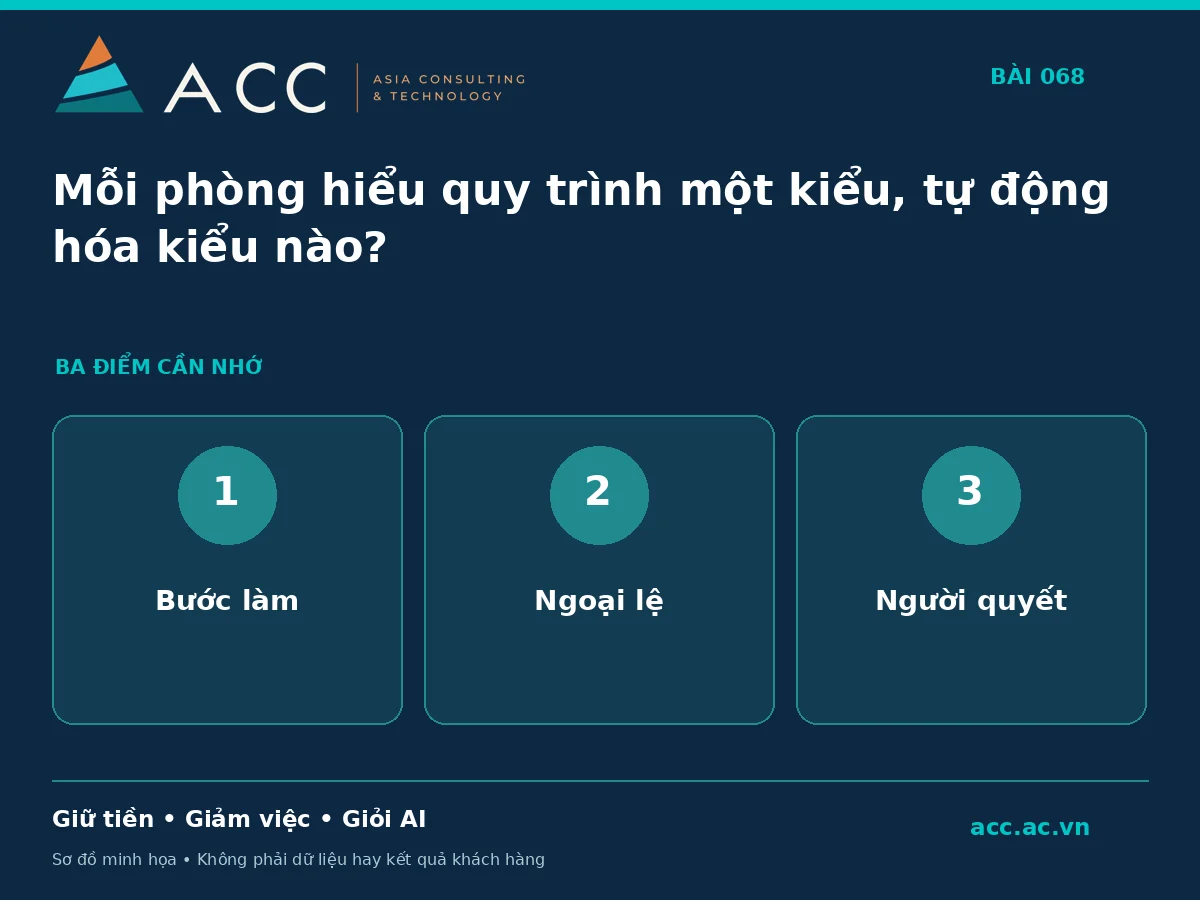
Describe one normal case and a few common exceptions. Identify who is responsible for decisions at each step. Only then design how AI can help read, classify, or report. Technology should follow a clearly defined problem.
A common situation
Illustrative scenario: The records are complete according to sales but incomplete according to operations. These conflicting interpretations emerge only when the project starts. Before technology, everyone needs to agree on a path with clear responsibility.
Three steps you can try
- Map one common case.
- Document the exceptions.
- Agree on decision-makers at handoff points.
What to remember
Describe one normal case and a few common exceptions. Identify who is responsible for decisions at each step. Only then design how AI can help read, classify, or report. Technology should follow a clearly defined problem.
This is a hypothetical illustration, not an ACC customer testimonial or project result.