Summary
A meaningful comparison requires grouping similar transactions and reviewing the context. ACC aims to identify points that deserve further questions, not draw conclusions from a discrepancy alone. Early detection is meant to support proper checks, not suspicion of every transaction.
A common situation
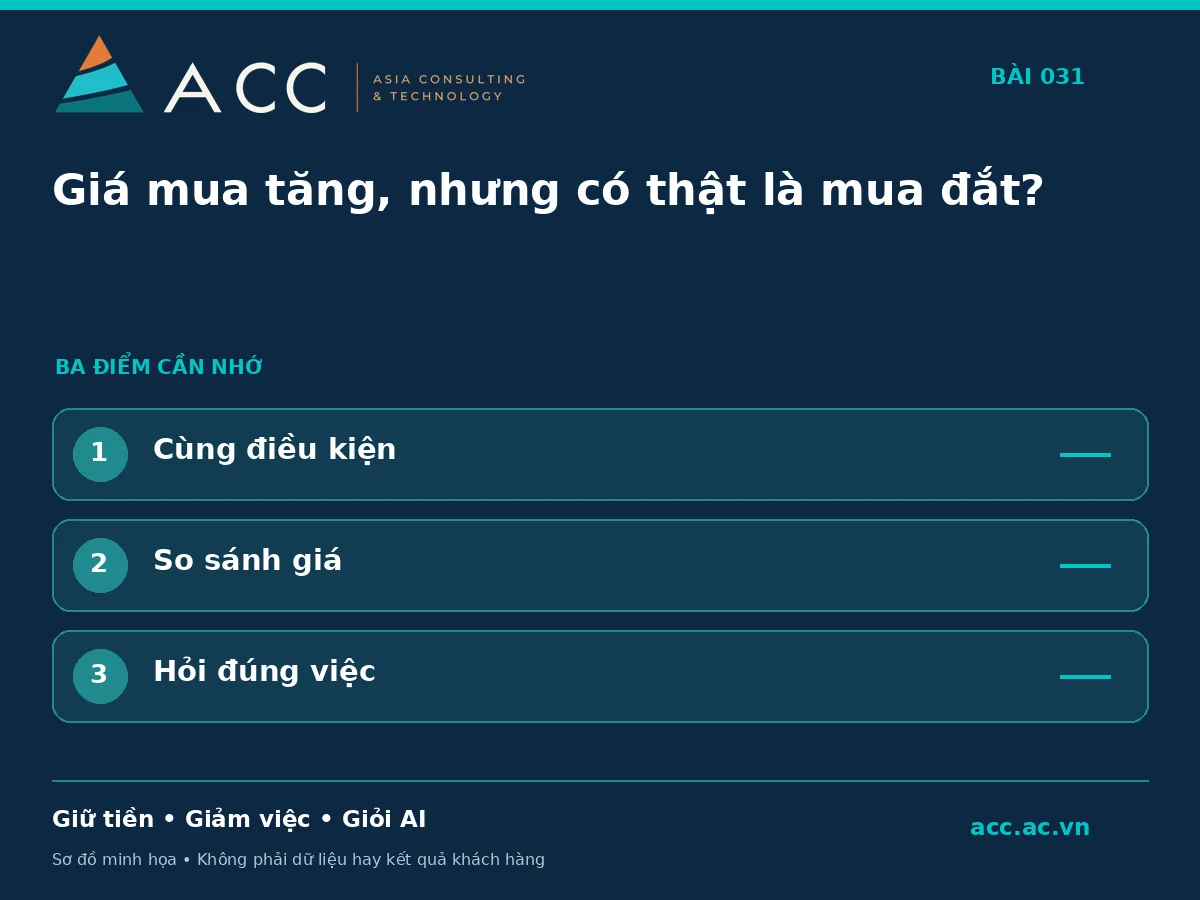
Illustrative scenario: An invoice with a higher unit price than the previous period makes the owner frown. The buyer explains that the specifications and delivery terms are different this time. The owner needs a fair comparison before asking who is responsible.
Three steps you can try
- Compare matching specifications, units, and time periods.
- Check quantities and delivery terms.
- Ask for the reason before drawing a conclusion.
What to remember
A meaningful comparison requires grouping similar transactions and reviewing the context. ACC aims to identify points that deserve further questions, not draw conclusions from a discrepancy alone. Early detection is meant to support proper checks, not suspicion of every transaction.
This is a hypothetical illustration, not an ACC customer testimonial or project result.