Summary
You need to know how far the machine can go and how it reports errors. If users cannot tell which results need another check, even a very tidy report can create a false sense of reassurance.
A common situation
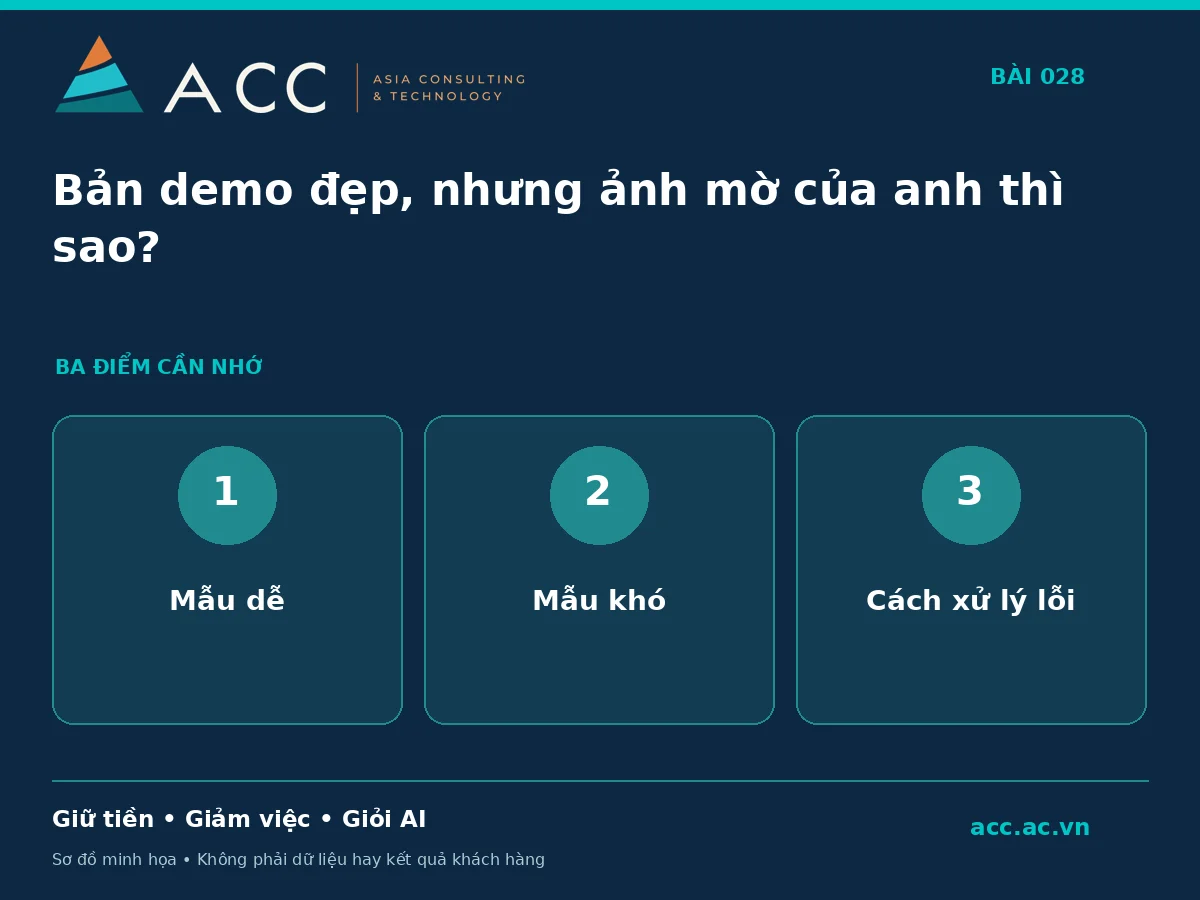
Illustrative scenario: During a trial, the tool works neatly with a clean spreadsheet. The user immediately thinks of the cropped photographs and abbreviated supplier names she encounters in practice. She wants to know whether the tool recognizes its limits or simply keeps answering confidently.
Three steps you can try
- Prepare both clear samples and difficult samples.
- See how the tool reports missing information.
- Check how results are routed back to a person for confirmation.
What to remember
You need to know how far the machine can go and how it reports errors. If users cannot tell which results need another check, even a very tidy report can create a false sense of reassurance.
This is a hypothetical illustration, not an ACC customer testimonial or project result.