Summary
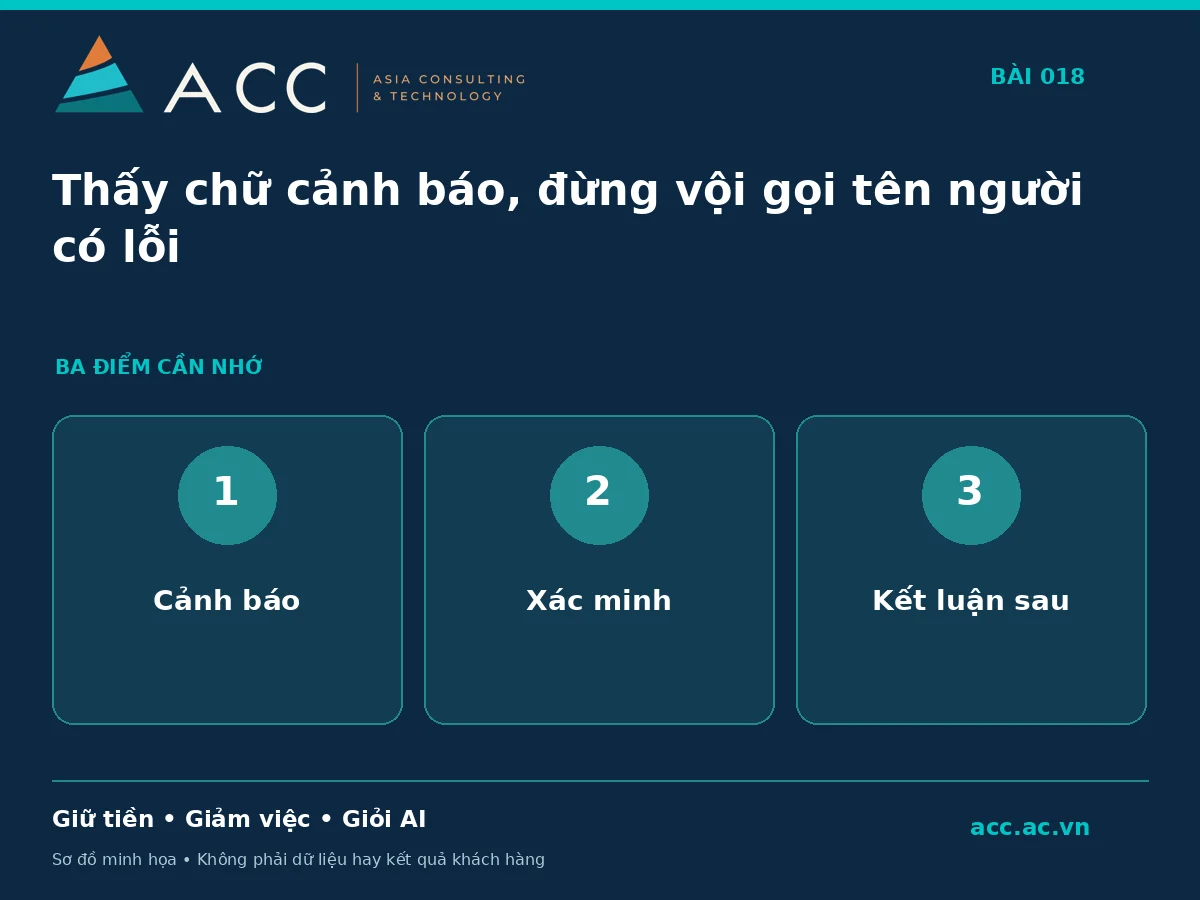
An alert is a starting point for further questions, not a finding of fraud. The reviewer needs to examine original documents and the transaction's context. ACC follows this principle: machines assist with review; people remain responsible where judgment is required.
A common situation
Illustrative scenario: An invoice line is highlighted in red. The business owner is about to ask who made the mistake, but the accountant suggests checking the original document first. Everyone needs a fair check, not a hasty conclusion.
Three steps you can try
- Read why the item was flagged.
- Review the documents and context.
- Draw a conclusion only after verification.
What to remember
An alert is a starting point for further questions, not a finding of fraud. The reviewer needs to examine original documents and the transaction's context. ACC follows this principle: machines assist with review; people remain responsible where judgment is required.
This is a hypothetical illustration, not an ACC customer testimonial or project result.