Summary
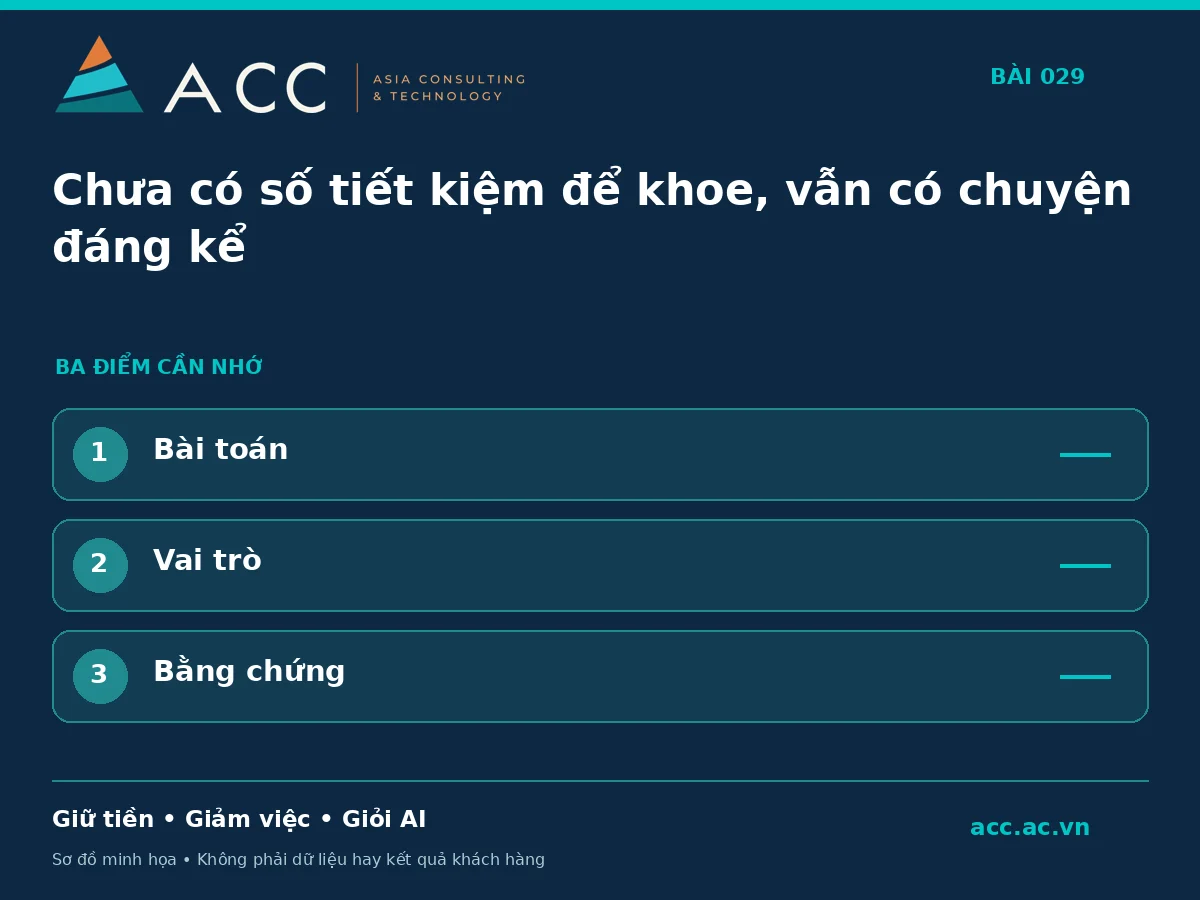
When there are no results authorized for publication, describe the problem, role, and substantiated outputs. Do not turn a hypothetical example into an achievement or use an unmeasured percentage to make the story seem more persuasive.
A common situation
Illustrative scenario: An implementation team wants to discuss a project but does not yet have permission to identify the client. They wonder whether to add an impressive percentage to make the article more appealing. Trust begins with accurately describing the work actually done.
Three steps you can try
- Describe a problem you have permission to disclose.
- Distinguish roles from results.
- Clearly identify what is illustrative and what is factual.
What to remember
When there are no results authorized for publication, describe the problem, role, and substantiated outputs. Do not turn a hypothetical example into an achievement or use an unmeasured percentage to make the story seem more persuasive.
This is a hypothetical illustration, not an ACC customer testimonial or project result.